
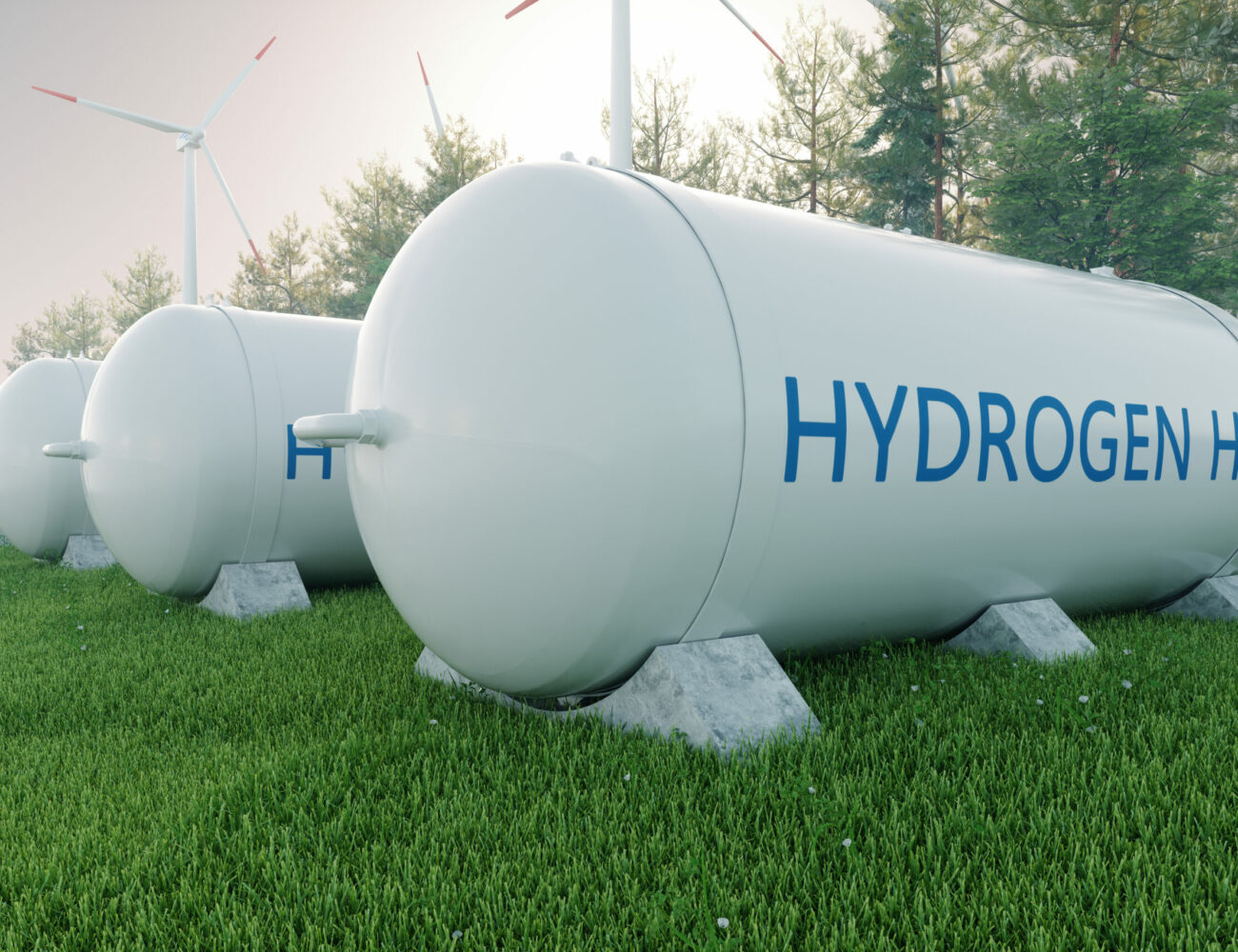
StorHyWall – Materials for H2
Start of the project: 01-09-2025
End of project: 30-08-2028
The StorHyWall project aims to develop and validate multi-material solutions suitable for the transport and storage of hydrogen. Within this project, the main objective is to propose a solution for the manufacturing of next-generation components or the retrofitting of existing components used in hydrogen distribution, transport or storage applications. This involves the development of new polymer and composite materials, the development of hydrogen barrier coatings applicable to different types and shapes of substrates and the establishment of a platform for characterizing the behavior of composite materials and coatings under hydrogen atmosphere.
On one hand, Materia Nova's activities will involve the synthesis, characterization, and optimization of new materials, possibly in combination with a coating, compatible with use in contact with hydrogen. On the other hand, the project also plans to contribute to the evaluation of the performance and durability of these materials (bulk or coatings). This will specifically involve:
- Developing epoxy resin-based composites with the high mechanical performance required for pressurized hydrogen storage applications.
- Developing multifunctional coating solutions with high hydrogen barrier properties, adapted to the type of substrate (metal, polymer, or composite) and the intended end application (transport or storage).
- Adapting the deposition technology for these coatings to ensure rapid and uniform application inside hollow bodies.
- Providing a platform for characterizing polymer and composite materials in contact with hydrogen. To this end, the objective is to supplement the existing characterization equipment with test benches to determine the behavior of polymers and composites in contact with hydrogen.
This equipment is a hydrogen permeabilimeter that makes it possible to measure hydrogen permeation through different samples. Unlike standard permeabilimeters that measure permeation by pressure variation, this permeabilimeter uses an ultra-sensitive hydrogen sensor that detects the hydrogen flux passing through the material. The main advantage is that the measurements are much faster. Only hydrogen can be measured. It should be noted that the device can also operate by pressure variation if needed.
Partners:
Coordinator: CRM
Partners: UCL, CENAERO