
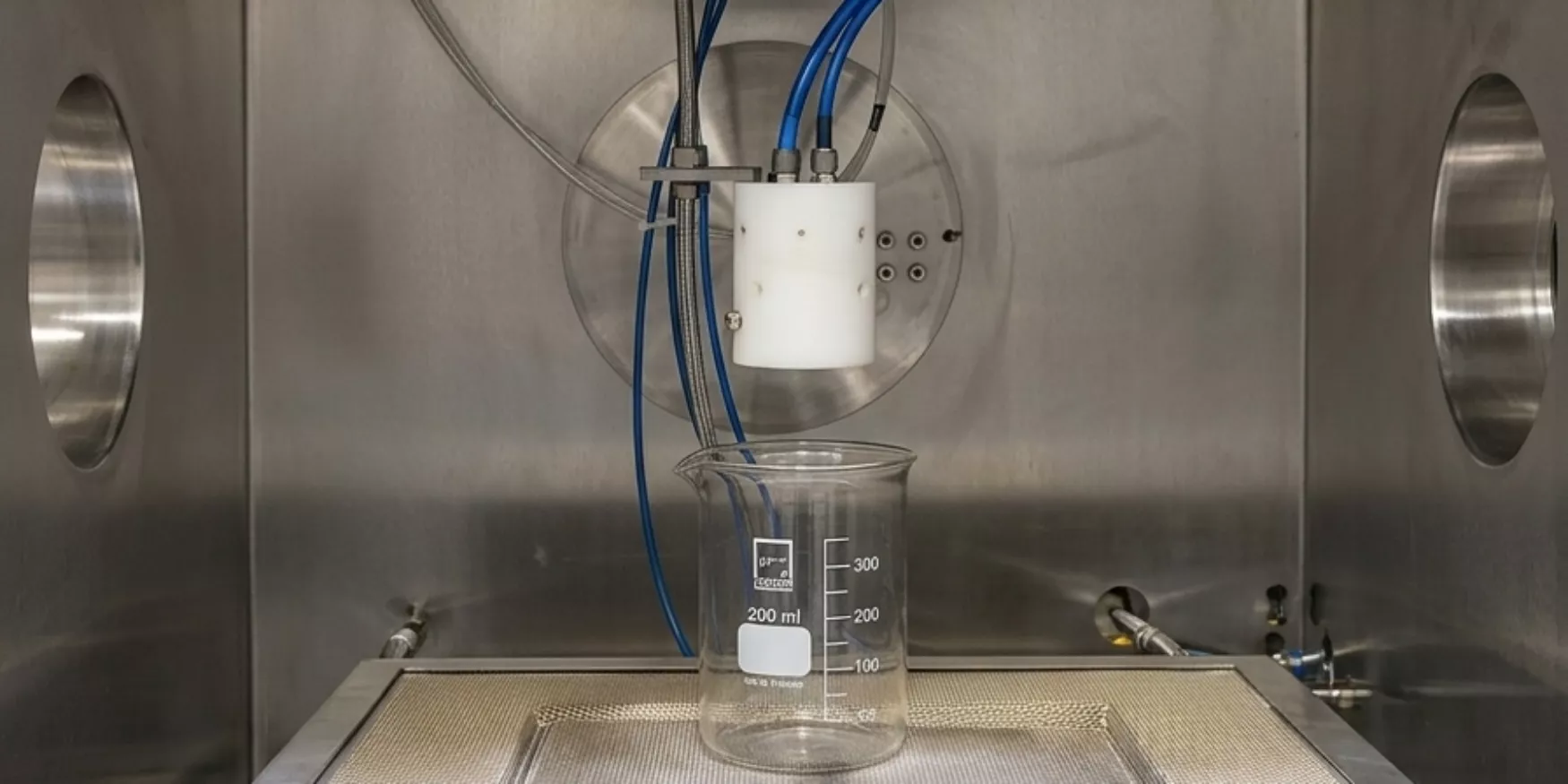
Spray Pyrolysis (AA-CVD) – functional thin film deposition in a closed chamber
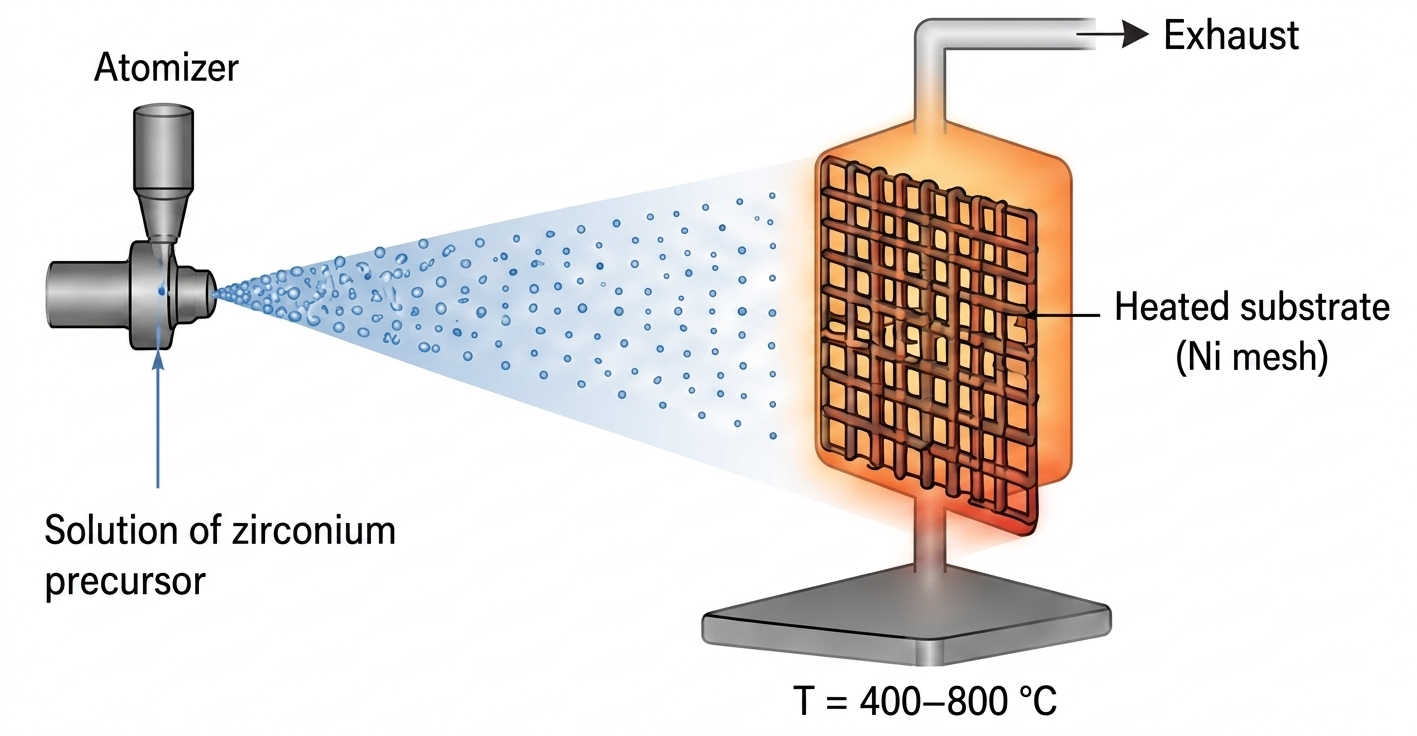
Spray pyrolysis is a thin-film deposition technique based on spraying a solution containing chemical precursors onto a heated substrate.
Unlike most academic or industrial spray pyrolysis setups, which operate in open air under a fume hood, Materia Nova's equipment operates in a "closed, controlled-atmosphere chamber." This configuration allows precise control of precursor injection and reaction residue extraction, with better reproducibility, traceability, and safety than an open setup.
The solution is atomized into fine droplets and transported to the substrate. On contact with the surface, heated to a high temperature (typically between 400 and 800 °C), the compounds decompose to form a solid functional coating.
Process
The process can be adapted to improve uniformity (e.g. electrostatic assistance). Depending on the targeted application, different spraying modes make it possible to obtain dense or porous layers, with an electrostatic mode for improved uniformity (developed in particular within the framework of the CLUED-O project). |
|
Precursors and materials
The technology allows the use of a wide range of precursors: metal nitrates, metal chlorides, alkoxides (e.g. Zr(OR)₄), organometallic complexes.
This flexibility enables the deposition of numerous functional oxides (ZrO₂, TiO₂, etc.).
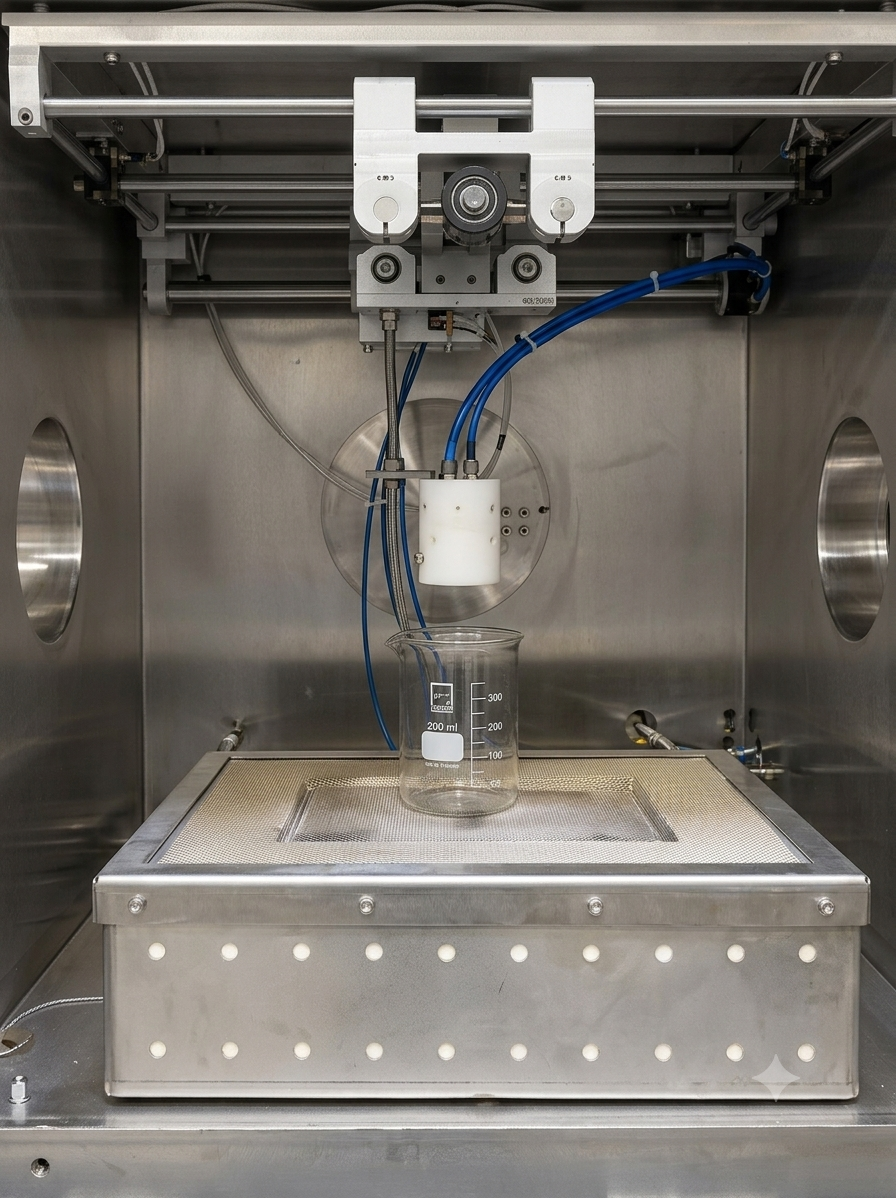
Our spray pyrolysis (AACVD) pilot unit, enabling R&D development and pre-industrial validation:
Key features:
- Controlled-atmosphere chamber (currently operated in oxidative/air mode)
- Possibility to use several spray nozzles in parallel within the chamber, allowing simultaneous injection of liquid precursors that are difficult to mix
- Exhaust gas capture and treatment
- Fully computer-controlled process
- Substrates up to A4 size (glass, quartz, silicon wafers, metals)
- Heating plate up to approx. 500 °C
This equipment allows work under reproducible and safe conditions, suited to industrial development.
Applications
- Functional coatings (optical, barrier, catalytic)
- Functional glazing: low-emissivity layers, transparent conductive oxides (TCO)
- Electrodes for batteries or sensors
- Energy coatings (photovoltaic, hydrogen, SOFC)
- Corrosion protection and high-temperature barrier coatings
- Surface protection and functionalization