
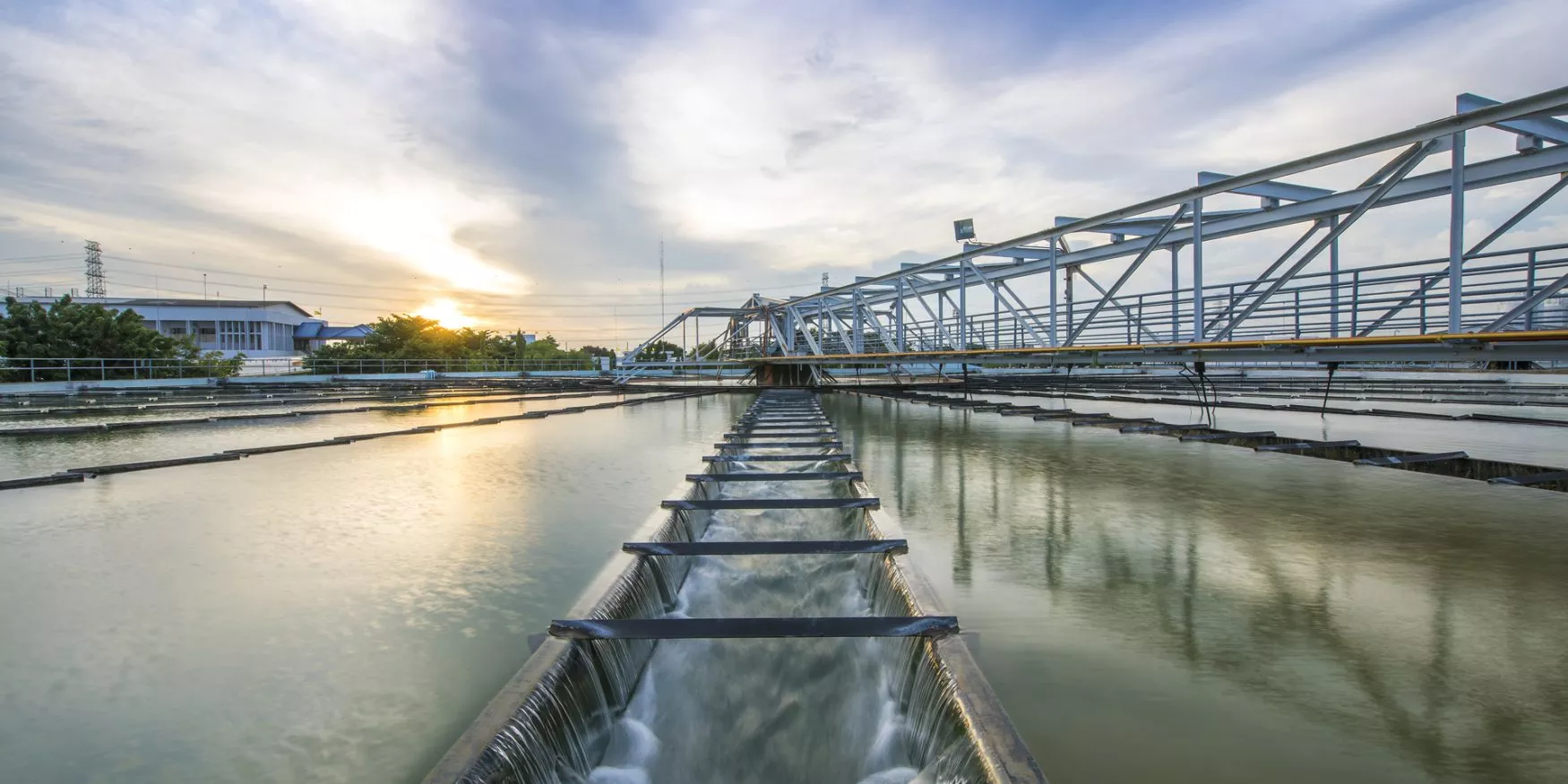
Water and liquid purification
The industrialization and urban development generate every day significant volumes of domestic, urban, and industrial effluents, contributing to the pollution of water, soil, and air. Today, their treatment is no longer an option: it is an environmental, regulatory, and strategic requirement.
Thanks to its multidisciplinary expertise, Materia Nova develops and offers efficient, innovative, and sustainable solutions for the treatment and purification of your effluents.
Among these, we can distinguish:
1/ Filtration using bio‑based membranes:
Materia Nova develops highly efficient filtration membranes with micro- and nanoporous structures made from bio‑based materials, for the filtration of water micropollutants such as micro- and nanoplastics. These membranes can be adjusted and tailored to the application by tuning their architecture and surface properties, as well as their lifetime.
2/ Photocatalysis process:
Materia Nova has strong expertise in the synthesis of metal oxides with controlled shape, (nano)structure, and porosity.
Materia Nova is able to synthesize, through soft and sustainable chemistry processes (aqueous solvent), photocatalysts based on TiO₂ and ZnO, highly active under light (visible or UV) for the degradation of organic pollutants, and which can be formulated as homogeneous films/coatings deposited on various substrates such as glass, quartz, stainless steel, aluminium, or concrete.
3/ Electro‑oxidation process:
Materia Nova develops functional electrocatalysts in the form of structured materials at different scales, composed of metallic alloys or metal oxides. These materials meet a double objective:
• Generate in situ highly reactive oxidizing species (such as hydroxyl radicals) capable of mineralizing organic pollutants;
• Reduce oxidation overpotentials required for the degradation of specific compounds (e.g., nitrogenous waste), while ensuring stable catalytic activity over time and resistance to electrode poisoning.
This approach is based on three main pillars:
o Design and functionalization of electrodes
Synthesis of electrodes with high active surface area through electrochemical processes and spray‑pyrolysis, using carbon-based materials, mixed metal oxides (e.g., Magnéli phase Ti₄O₇), or metallic alloys. The materials are optimized to promote charge transfer and improve catalytic selectivity.
o Advanced electrochemical characterization
In‑depth study of the electrochemical properties of materials using different techniques: cyclic voltammetry (CV, LSV), electrochemical impedance spectroscopy (EIS), and diffusion current measurements. These analyses help establish relationships between structure, activity, and stability.
o Optimization in pilot electrochemical cell
Adjustment of operating parameters and validation of performance in a pilot‑scale electrochemical cell, to optimize process efficiency for treatment applications.
4/ Plasma process:
• Geometry optimization, test bench setup
• Parametric optimization of the plasma for pollutant removal
• The use of plasma technologies for chemical and biological decontamination offers the dual advantage of simultaneously destroying organic pollutants and microbes. Plasma can achieve decontamination on solid, liquid, or gaseous materials and on large volumes of industrial effluents, thus offering major advantages (speed, efficiency, and low cost).
5/ Bioremediation:
Materia Nova, more specifically through its Biotech unit (MaNo‑Biotech), has been working for years on the development of biological technologies for pollutant removal, and on the adaptation, optimization, and validation of these technologies depending on the target molecules and emissions.
Materia Nova has for instance developed a microbial technology based on bacterial consortia for the removal of metals and the recovery of metallic nanoparticles from polluted sites, as well as bacterial and fungal consortia to eliminate polycyclic aromatic hydrocarbons.
The biotech unit also has advanced expertise in microorganisms and the enzymes they produce. An alternative to the use of microorganisms is therefore to use enzymes. Several microbial enzymes with bioremediation capacity have notably been isolated and characterized from various natural sources.
Our strengths
- Due to its multidisciplinary nature, Materia Nova offers a variety of processes that can be adapted to the quantities and types of pollution to be treated.
- Monitoring and detection by different sensors technologies.